As I write this article, my heart is heavy, awaiting the release of the rest of the hostages from phase one of the Gaza cease fire agreement. There are 15 more presumably living hostages and the bodies of eight hostages who are no longer alive yet to be returned. There is no indication of how many of the remaining 65, whose return will, God willing, be part of a phase two agreement, are still alive.
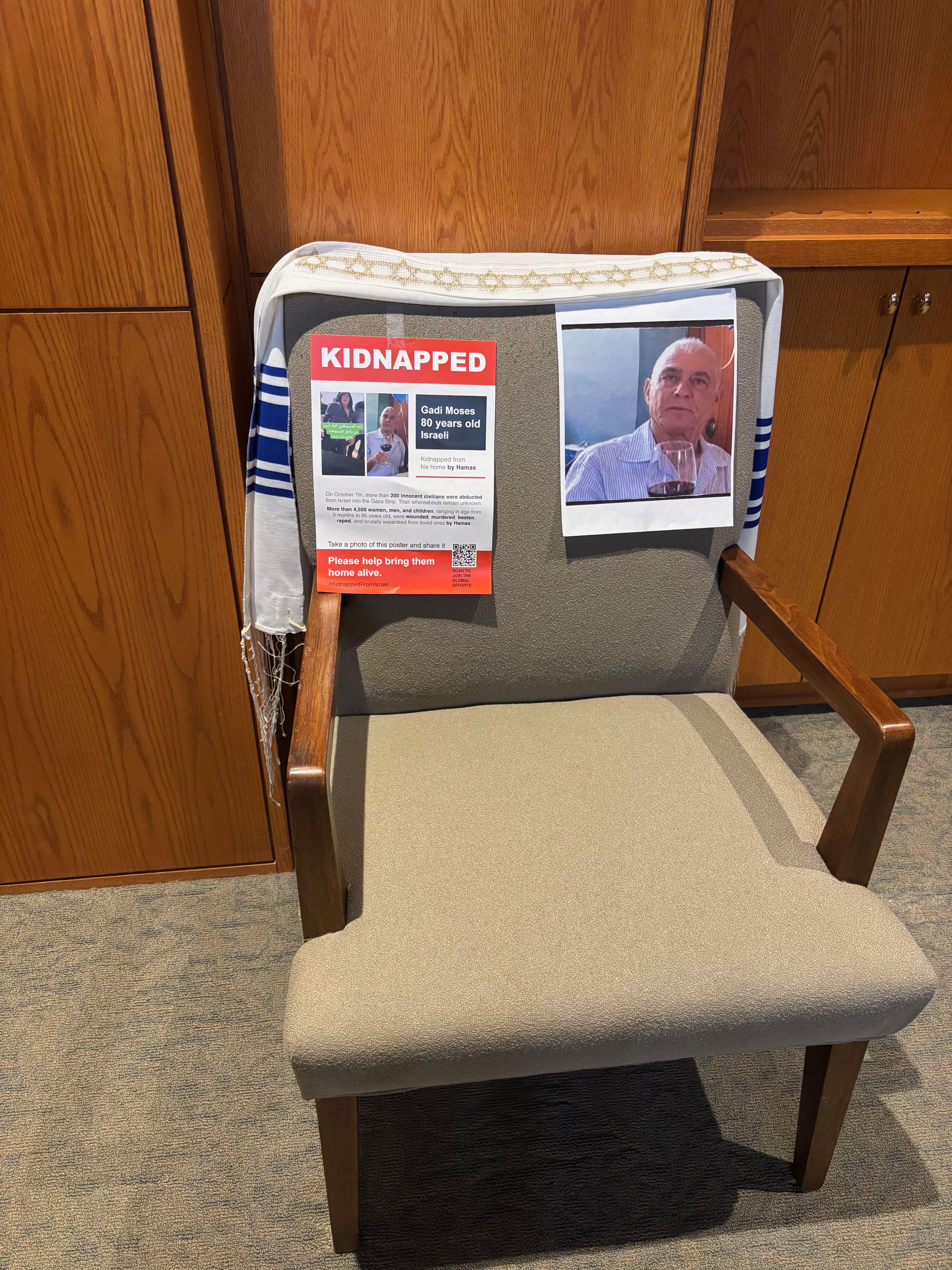
At the same time, I rejoice with relief at the images and video of the hostages who have been returned and reunited with their families. In particular, I am grateful that Gadi Moses, the hostage whose picture has occupied a chair on the Bima during our services and a chair in the meeting room during Kiddush and meetings, has been released.
According to interviews following his release, while held hostage by Hamas for more than 15 months in Gaza, 80-year-old Gadi Moses ate mainly a piece of bread and an olive twice a day. He lost 15 kilograms, about 33 pounds during his captivity. During that time, he was given a small bowl of water to wash himself every five days and had to ask to use the toilet. He moved frequently and was mostly alone, typically held in a room about 2 meters square (slightly more than 6 feet square). He calculated math problems in his head to distract himself, and walked up to 11 km (six miles) a day, measuring the distance by walking the perimeter of his room.
Gadi Moses helped build Kibbutz Nir Oz with his bare hands. A passionate agronomist and farmer, he used the knowledge he found studying the ground and how to make things grow to help foreign countries grow crops. Gadi adored explaining the fine details of agriculture to people coming to the Israeli kibbutz for instruction. In his retirement, he built a communal garden there. A lover of fine wines, he grew grapes as a hobby. He loved nothing more than nature and his family, his three children and his grandchildren.
I have reached out to Gadi to offer my gratitude that he is back home and to invite him, if and when he is able to travel, to visit us in Grand Rapids, sit in the chair we had designated for him, and speak to us about his experience and his plans to rebuild his beloved Kibbutz community.
As we celebrate Purim this month and Pesah next month, let us remember that the evil represented by Haman and Pharaoh are not just stories; they are a real part of the world in which we live and a real threat to our continuing ability to publicly live out of Judaism in the world today. Gathering to hear the Megillah and to celebrate a Seder is our way of saying, “No matter how hard you try to prevent us from embracing our Torah and living our Jewish lives, we will persevere!”
Hebrew word(s) of the Month:
- ne’edar – missing
- nishbah – taken captive
- ḥatufim – hostages
- m’shuḥrar – freed
 Embodied Torah