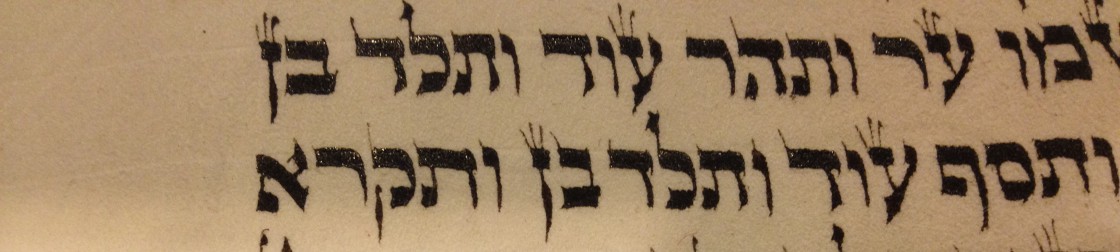
Jews and Judaism are strongly connected to the written word. Intellectual and spiritual development is centered on a reading of Torah that incorporates both a literal understanding of its stories, and an interpretive tradition that draws out both modes of practice, which we call mitzvot, and pathways of ethical behavior. As we celebrate Pesaḥ we reframe the literal story with midrash that invites us to imagine that we were slaves in Egypt and God set us free. We remind ourselves that as free as were are, no one is completely free. We have responsibilities that enable us to make a living and support ourselves and others, and we have obligations to other people in our family, in our congregation and social circles, in our community, and in our country. We are free to walk away from commitments we have made, but even unhoused people who have either walked or have been driven away from most societal norms have rules by which they must abide. In my rides with the Grand Rapids police, I have watched some of those rules being enforced, such as no sleeping in doorways or obstructing public assess sidewalks, no public nudity, no trespassing on private property, and of course not violating civil or criminal laws of the city and state. We all choose the extent to which we want to conform to societal expectations.
When we live our lives as Jews committed to our mitzvot, we voluntarily give up some of our freedoms in favor of a religious practice intended to bind us to God or make us better human beings, or protect our planet or support vulnerable people. We Jews have stubbornly insisted that it is worth it and have maintained a written presence in the world for as long or longer than any other tribal society, with records maintained for over 2500 years, containing stories that record events a thousand years earlier.
Contemporary Jews are the heirs to an unbelievably rich tradition. Living according to the Jewish calendar, appreciating the beauty of Hebrew, regulating one’s diet – these are sacred practices, but they are at odds with the civic culture of Grand Rapids or anywhere else outside of Israel. I find in the Torah’s pathways and instructions a connection with God. From the time 13-year old me celebrated my Bar Mitzvah, I have been on a path of exploration, though Jewish camps, Israel programs, youth groups, involvement at Hillel and deep study of Judaism.
When you celebrate Pesah this year, consider how you might experience freedom differently. Rather than molding the Seder or a set of Jewish principles to fit your conception of yourself, see what it feels like to constrain yourself within just one Jewish ritual. I’m thinking of something like lighting Shabbat candles, saying Kiddush at dinner on Friday evening, giving tzedakah to a Jewish cause daily, putting on tefillin daily except Shabbat, saying the shema twice a day, or saying a brief prayer before or after you eat. Take on a single mitzvah for a week, a month, or the rest of the year. Imagine yourself as the clay, and God, through the mitzvah, as the potter (as in the Yom Kippur evening liturgical poem). Allow yourself to be shaped and transformed by the ritual. And see what happens. I wish you a joyous and kosher Pesaḥ!
Hebrew Words of the Month:
- av’dut – slavery
- ḥeirut – freedom
- piyyut – liturgical poem (from the Greek word from which we get the word ‘poet.’)
 Embodied Torah